How to Take
Warnings and Contraindications
This product is intended for adults only.
Do not use in case of individual intolerance or hypersensitivity to any of the product’s components.
Do not use during pregnancy or breastfeeding.
Not intended to treat diseases. Consult a healthcare professional before use.
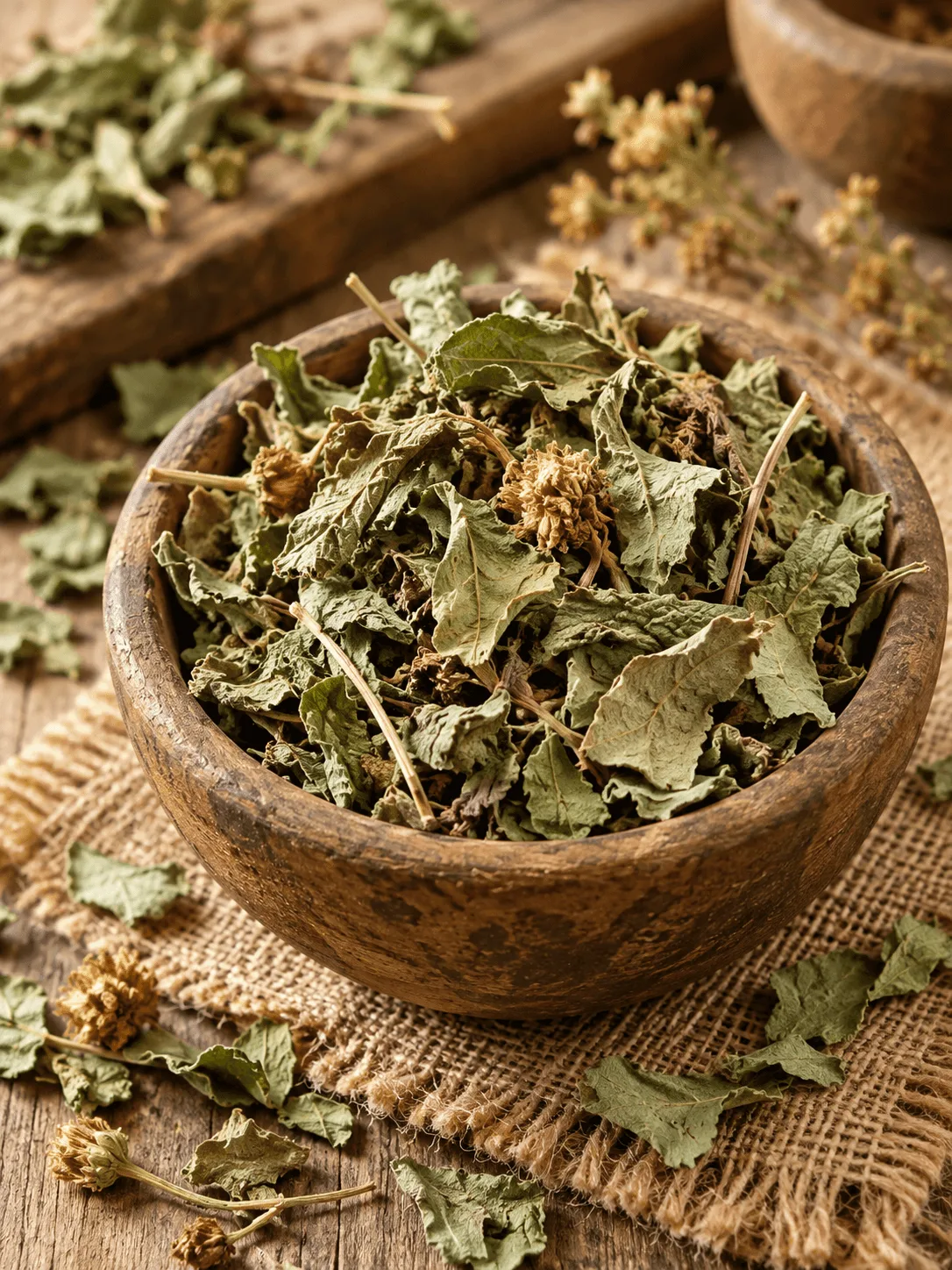
Take 1-2 capsule daily, preferably in the evening, with a sufficient amount of water.
Active Substances
The phytochemical profile of Blue Lotus includes various plant compounds, including alkaloids of the aporphine group. Nuciferine and apomorphine are frequently discussed in scientific literature.
Modern research suggests that the activity of Blue Lotus compounds is associated with the dopamine and serotonin systems. These systems are involved in the regulation of mood, emotional responses, sensitivity, and nervous system activity.
Detailed description
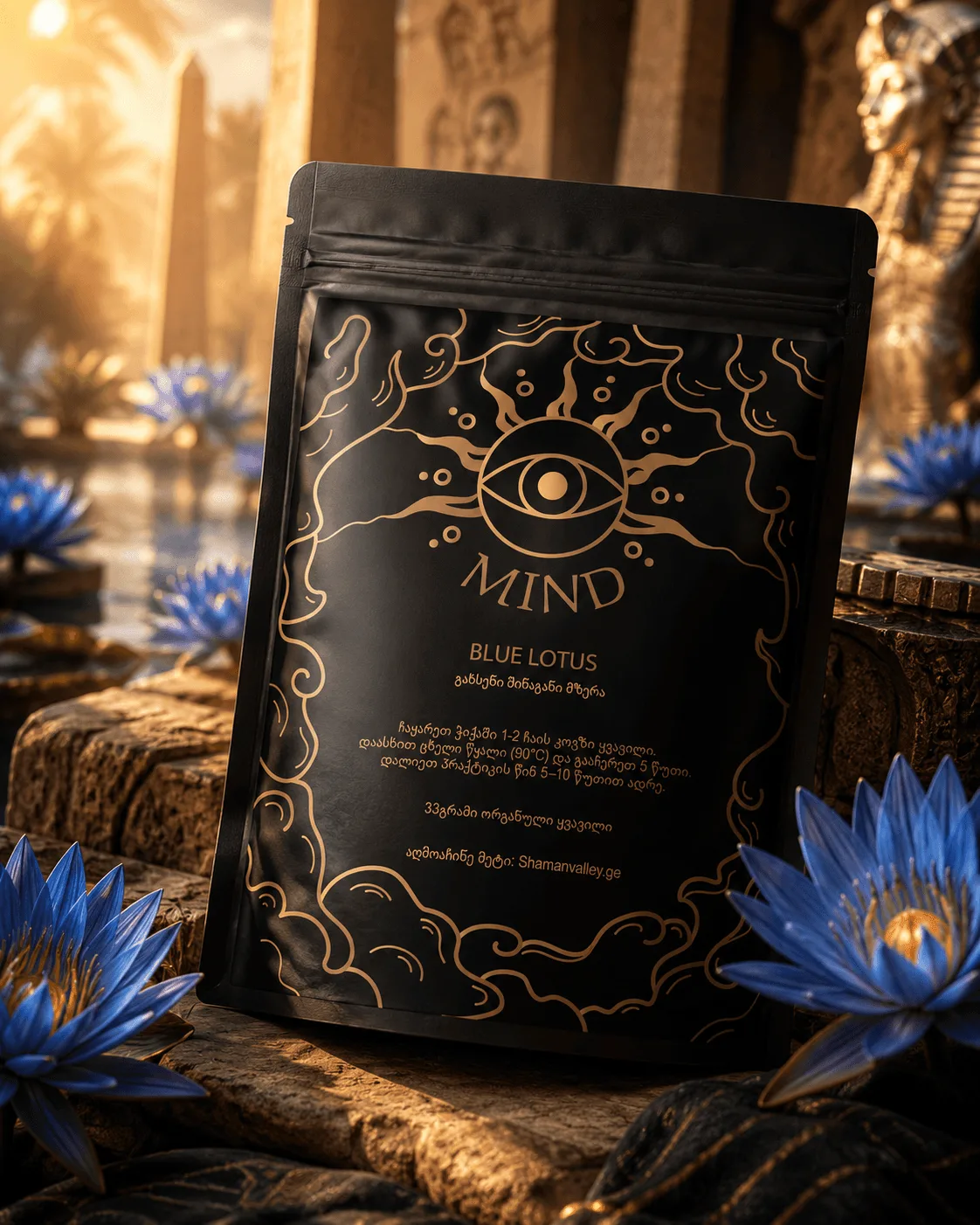
In Ancient Egypt, Blue Lotus held a special place in ritual and symbolic culture. Every morning the lotus opened, and in the evening it closed again — this natural cycle became a symbol of the renewal of life and reincarnation.
For the same reason, Blue Lotus became a symbol of inner vision and deeper states of consciousness. In modern esoteric traditions, it is also associated with the pineal gland and the “third eye” as symbols of inner perception and consciousness.
Blue Lotus: Neurochemical Profile and Mechanisms of Action
The phytochemical and neuroactive properties of Nymphaea caerulea are still being studied. Of particular interest are aporphine-group alkaloids and their interactions with dopamine and serotonin receptor systems.
1. Relaxation — Nuciferine and the Serotonin System
Biochemistry:
Nuciferine interacts with several serotonin receptors: it acts as an antagonist at 5-HT2A, 5-HT2B, and 5-HT2C receptors and as an agonist at the 5-HT1A receptor. At the same time, it also has complex activity at dopamine receptors.
Effect:
Modulation of these receptor systems may help explain the calming profile associated with Blue Lotus — reduced nervous excitation, relaxation, and a shift toward a calmer mental state.
2. Mood and Sensitivity — the Dopamine System
Biochemistry:
Apomorphine is a dopamine receptor agonist, while nuciferine also interacts with several dopamine receptors — including D2, D4, and D5 — and influences the dopamine transporter.
Effect:
The dopamine system is involved in motivation, reward perception, emotional responses, and sensory experience. Interaction with this system may partly explain the traditional association of Blue Lotus with mood, sensitivity, and aphrodisiac properties.
3. Pineal Gland — D4 Receptors and Melatonin Regulation
Biochemistry:
Nuciferine acts as an agonist at the dopamine D4 receptor. D4 receptors are also functionally active in the cells of the pineal gland — pinealocytes — where, together with adrenergic receptors, they participate in the regulation of melatonin synthesis and release.
D4 receptor activity itself follows a circadian rhythm and contributes to the regulation of pineal hormonal signaling associated with the light-dark cycle.
Effect:
This provides a specific biochemical point of connection between one of the active alkaloids associated with Blue Lotus and pineal gland function.